
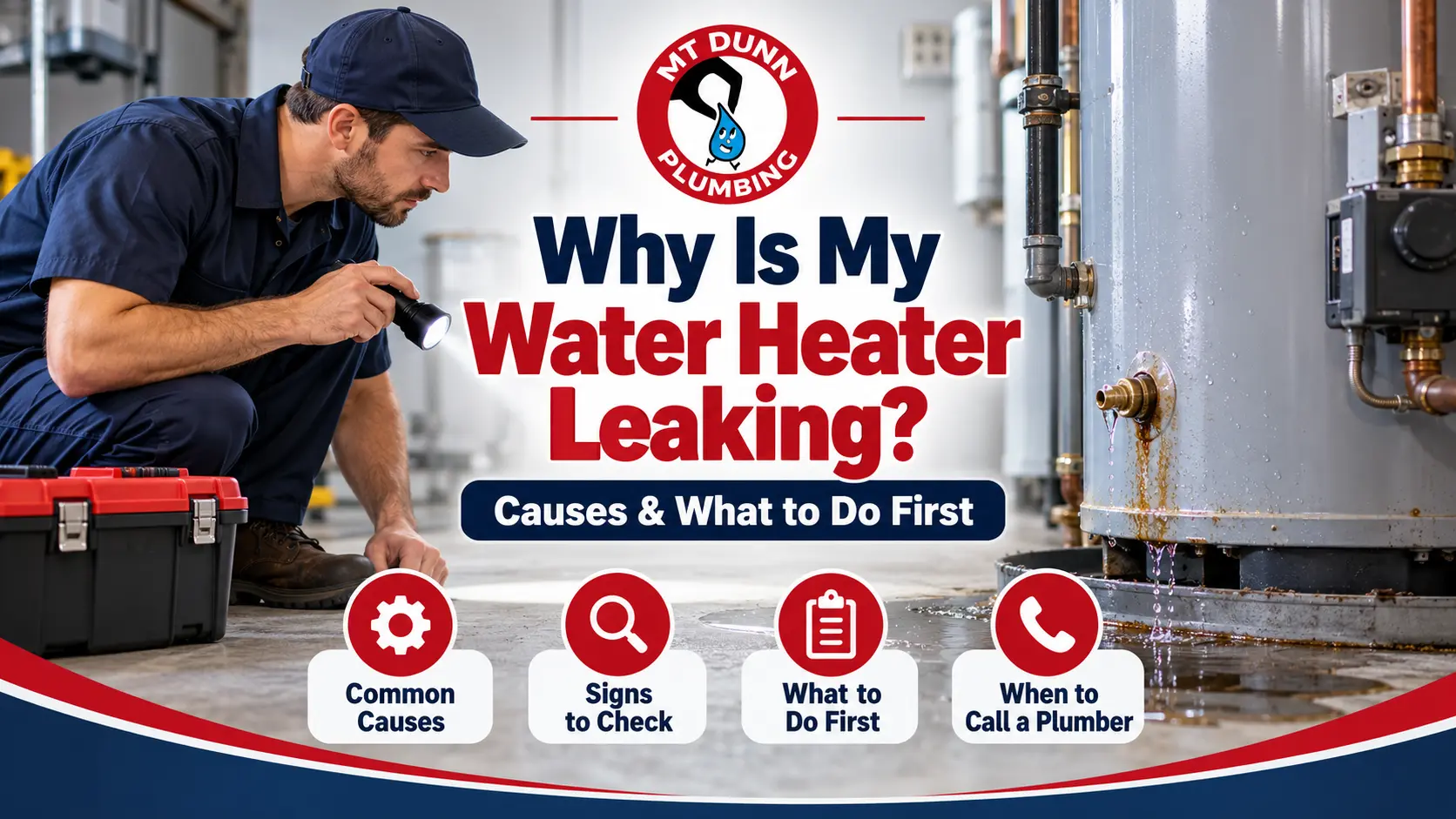
A leaking water heater can quickly turn from a minor plumbing concern into a serious water damage problem. Even a small puddle around the tank may indicate a loose connection, worn component, corrosion, excessive pressure, or an internal tank failure. Because water heaters combine water, heat, pressure, and, in many homes, electricity or gas, leaks should not be ignored.
The location and amount of water can provide important clues about the cause. A few drops around a pipe connection may have a relatively simple solution, while water coming from the bottom of the tank can indicate that the unit itself has failed. Knowing what to check first can help you respond safely and determine when professional water heater repair is necessary.
What Causes a Water Heater to Leak?
Several problems can cause a water heater to leak. Some involve external plumbing connections and may be relatively straightforward to correct. Others indicate deterioration inside the water heater and may require replacement.
1. Loose Water Connections
One of the simpler causes of a water heater leak is a loose plumbing connection. The pipes supplying cold water to the heater and carrying hot water away from it are connected using fittings that can loosen over time.
Changes in temperature, vibration, normal movement, and years of use can contribute to connections becoming less secure. You may notice a small amount of water or mineral buildup around a fitting.
A plumber can inspect the connection and determine whether tightening, replacing a fitting, or replacing a connector is appropriate.
2. Faulty Temperature and Pressure Relief Valve
A water heater’s temperature and pressure relief valve, commonly called a T&P valve, is an important safety component. It is designed to release water when temperature or pressure inside the tank reaches an unsafe level.
If water is continuously dripping or flowing from the relief valve discharge pipe, the valve may be defective. However, the valve may also be responding to excessive pressure or temperature.
Simply replacing the valve without identifying why it opened can leave the underlying problem unresolved. A professional should evaluate the system if the valve is repeatedly discharging water.
3. Leaking Drain Valve
Water heaters have a drain valve that allows the tank to be emptied for maintenance, flushing, or replacement. Over time, the valve can become worn or fail to seal properly.
A leaking drain valve may produce a slow drip near the lower portion of the heater. Sediment buildup can also interfere with the valve’s ability to close completely.
Depending on the condition of the valve, repair or replacement may be possible.
4. Corrosion Inside the Tank
Corrosion is one of the more serious causes of water heater leaks. Traditional storage water heaters contain metal tanks that are exposed to water for years.
The tank is protected by components such as an anode rod, but that protection eventually becomes less effective. If corrosion progresses through the tank wall, water can escape.
Once the actual storage tank has developed a significant leak, replacing the entire water heater is generally more practical than attempting to repair the tank itself.
5. Sediment Buildup
Minerals and sediment can accumulate at the bottom of a storage water heater. This is particularly common where the water supply contains significant mineral content.
Sediment can reduce heating efficiency and contribute to overheating of the tank’s bottom surface. Over a long period, this can contribute to deterioration and premature failure.
Regular maintenance can help reduce sediment accumulation, although the appropriate maintenance procedure depends on the type and condition of the water heater.
6. Failed Heating Element Gasket
Electric water heaters typically use heating elements installed through the tank wall. These elements have gaskets that help prevent water from escaping around the opening.
If the gasket deteriorates, becomes damaged, or loses its seal, water may leak around the heating element.
This type of leak can sometimes be repaired without replacing the entire water heater. However, electrical power must be disconnected before work is performed, and the tank needs to be handled appropriately.
7. Excessive Water Pressure
High water pressure can place additional stress on plumbing fixtures, valves, fittings, and water heater components.
If household water pressure is too high, the water heater’s pressure-relief system may discharge water. High pressure can also contribute to premature wear of plumbing connections.
A professional can test the home’s water pressure and determine whether a pressure-reducing valve or another solution is appropriate.
8. Thermal Expansion
When water is heated, it expands. In a plumbing system that does not have adequate room to accommodate this expansion, pressure can increase.
This is particularly relevant in closed plumbing systems. An expansion tank may be used to help manage thermal expansion and reduce pressure fluctuations.
If a water heater repeatedly discharges through its relief valve, thermal expansion should be considered as one possible cause.
9. Damaged or Aging Supply Lines
Flexible supply lines and other connectors can deteriorate with age. A connection may begin leaking even though the water heater itself is still functioning normally.
Look for moisture, corrosion, staining, or mineral deposits around the connection points. Because a failed supply line can release water quickly, aging or visibly damaged connectors should be professionally evaluated.
10. Cracked or Damaged Tank
A physical crack or significant structural damage to the tank can result in a persistent leak. Once the storage tank itself is compromised, repairs are generally not a long-term solution.
In these circumstances, water heater replacement is typically necessary.
What Should You Do First If Your Water Heater Is Leaking?
The first priority is to stop the water supply and make the area safe. If the leak is significant, locate the cold-water shutoff valve above the water heater and turn it clockwise to stop water entering the tank. If the valve cannot be operated or the leak continues, you may need to shut off the home’s main water supply.
Next, consider the type of water heater you have. For an electric water heater, turn off the power at the dedicated circuit breaker if you can do so safely and the surrounding area is dry. For a gas water heater, turn the gas control to the appropriate off setting if you can do so safely. Avoid touching electrical components while standing in water.
Do not immediately attempt to drain, disassemble, or repair the unit unless you understand the equipment and the situation is safe. If water is spreading, the leak is substantial, or you notice gas odor, electrical hazards, unusual noises, or steam, contact a qualified professional promptly.
How Can You Prevent Water Heater Leaks?
Routine maintenance can help identify problems before they become major leaks. Depending on the water heater type, useful preventive measures may include:
- Inspecting connections periodically for moisture or corrosion.
- Checking the area around the tank for unexplained puddles or staining.
- Following recommended flushing procedures to manage sediment.
- Inspecting the anode rod when applicable.
- Checking water pressure if pressure-related problems are suspected.
- Monitoring the relief valve and discharge piping for abnormal dripping.
- Replacing aging components before they fail.
- Scheduling professional inspections when the unit shows signs of deterioration.
A drain pan installed beneath a water heater can also help contain smaller leaks, although it does not prevent the leak itself.
When Should You Call a Plumber for a Leaking Water Heater?
You should contact a qualified plumber when the source of the leak is unclear, the leak is persistent, the tank appears corroded, or you cannot safely stop the water.
Professional help is particularly important when:
- Water is coming from the tank itself.
- The leak is getting worse.
- The relief valve repeatedly releases water.
- You notice significant corrosion.
- The water heater is producing unusual noises.
- There is substantial water around the unit.
- You suspect excessive water pressure.
- The heater is connected to gas and you notice a gas odor.
- Electrical components may have been exposed to water.
- The water heater needs to be replaced.
A professional can determine whether the problem requires a simple component repair, pressure correction, maintenance, or complete replacement.
What Happens During a Water Heater Leak Inspection?
A plumbing professional will generally begin by identifying the exact source of the water. They may inspect the tank, water connections, valves, drain assembly, heating components, and surrounding plumbing.
The condition and age of the unit may also be considered. If pressure is suspected, the home’s water pressure can be evaluated. For systems with thermal expansion concerns, the relevant plumbing components may also be checked.
After identifying the cause, the plumber can explain whether repair or replacement is the more appropriate option.
When Should You Replace or Repair a Leaking Water Heater?
The answer depends on the type of leak and condition of the unit.
|
Problem |
Typical approach |
|
Loose plumbing connection |
Repair or tighten connection |
|
Damaged supply connector |
Replace connector |
|
Faulty drain valve |
Repair or replace valve |
|
Failed T&P valve |
Inspect cause and replace if appropriate |
|
Heating element gasket leak |
Replace gasket/component |
|
Excessive water pressure |
Diagnose and correct pressure issue |
|
Heavy sediment buildup |
Perform appropriate maintenance |
|
Corroded tank |
Usually replace water heater |
|
Cracked tank |
Usually replace water heater |
|
Repeated leaks in an aging unit |
Consider replacement |
Why Choose MT Dunn Plumbing for Water Heater Leak Repair in Hillsboro, OR?
When your water heater starts leaking, getting professional help quickly can help limit water damage and prevent a small issue from becoming a larger plumbing problem. MT Dunn Plumbing provides water heater leak repair services in Hillsboro, OR, with a focus on identifying the source of the leak and determining the appropriate repair solution. Whether the issue involves a connection, valve, fitting, tank component, or another part of the system, their plumbing professionals can assess the problem and recommend the next step.
Choosing a local plumbing company can also make it easier to address water heater problems fastly. MT Dunn Plumbing serves Hillsboro homeowners with plumbing solutions designed around the specific issue affecting their water heater. From troubleshooting the cause of a leak to completing necessary repairs or discussing replacement when repair is no longer practical, the team can help homeowners make an informed decision and restore dependable hot water service.
Frequently Asked Questions
Can a small water heater leak get worse?
Yes, a small drip can indicate a developing valve, connection, corrosion, or tank problem. Even if the leak appears minor, addressing it early can help prevent water damage and more expensive repairs.
Can high water pressure cause a water heater to leak?
Yes, excessive water pressure can place additional stress on the water heater and its components. A plumber can check the home’s water pressure and determine whether a pressure-reducing or expansion-control solution is needed.
How quickly should a plumber inspect a leaking water heater in Hillsboro?
A plumber should inspect a leaking water heater as soon as practical, especially when the leak is increasing, water is pooling around the unit, or the source cannot be identified.
Can an old water heater suddenly start leaking?
Yes, years of corrosion, sediment accumulation, pressure fluctuations, and normal wear can eventually weaken the tank or its components. Older units are generally more likely to develop leaks.
Does a water heater leak always mean the tank is bad?
No, many leaks originate from replaceable components such as valves, fittings, or pipe connections. Determining exactly where the water originates is important before deciding whether the entire unit needs replacement.